In this article
Quick answer: Gallbladder surgery is usually recommended when gallstones cause pain or complications such as gallbladder inflammation, bile duct obstruction or gallstone pancreatitis. Stones discovered incidentally in an otherwise normal gallbladder often do not need surgery if they cause no symptoms. The decision depends on your symptoms, scan findings, overall health and the risks of delaying treatment. Severe abdominal pain, fever, jaundice or repeated vomiting require urgent assessment.
An ultrasound report showing gallstones often brings an immediate question: “Do I need an operation?”
For some people, surgery is the appropriate next step. Others may be advised to observe their condition and seek reassessment if symptoms develop. The presence of a stone alone does not tell the whole story.
Understanding why gallbladder surgery is recommended can help you make an informed decision. It also helps distinguish a planned surgical consultation from symptoms that need urgent hospital care.
What Does the Gallbladder Do?
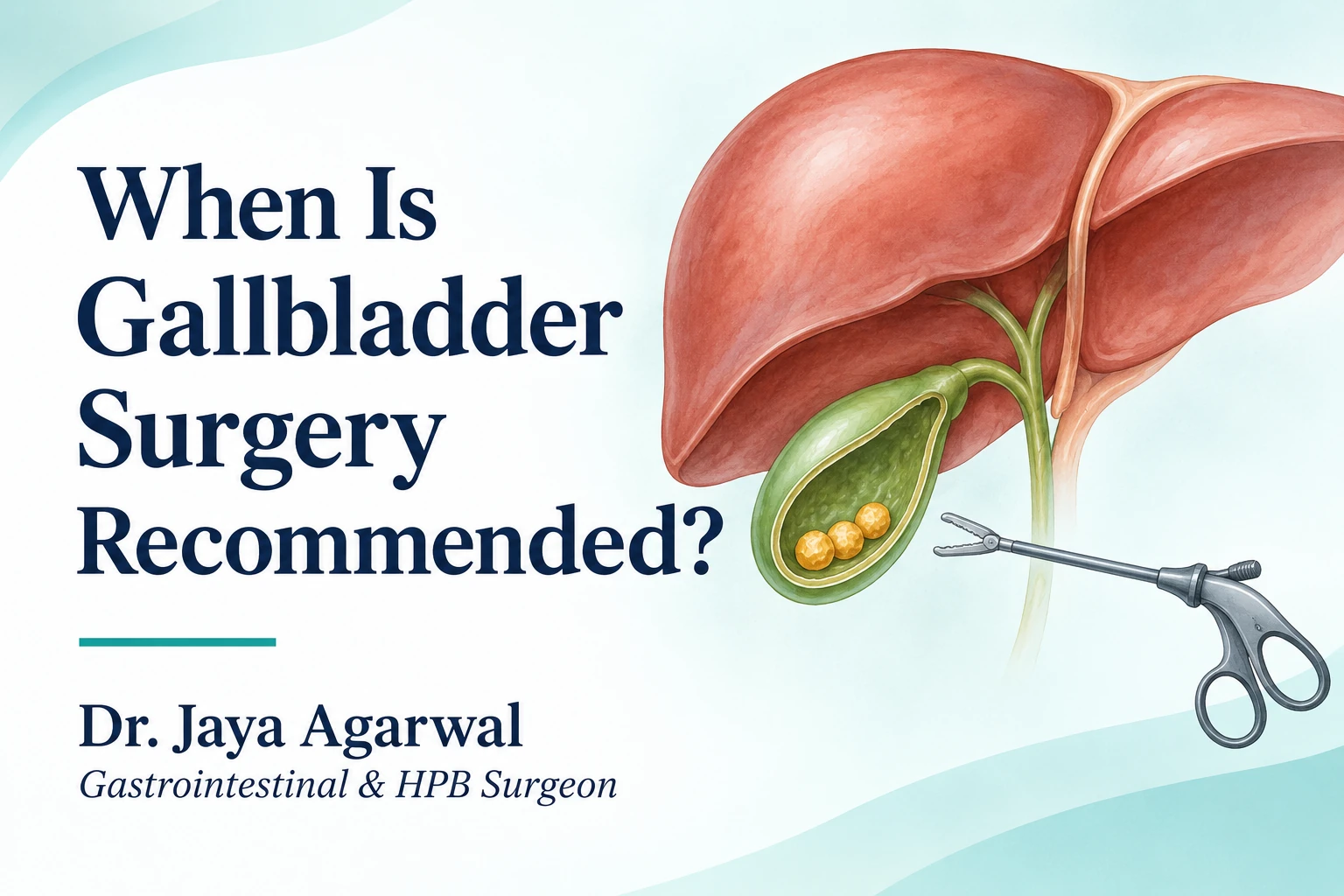
The gallbladder is a small pouch beneath the liver in the upper right abdomen. It stores bile, a fluid produced by the liver that helps digest fats.
After a meal, the gallbladder contracts and releases bile into the small intestine through the bile ducts.
Gallstones develop when substances in bile form solid deposits. These stones may remain inside the gallbladder without causing problems. However, they can cause pain or complications if they obstruct the gallbladder outlet or enter the common bile duct.
Gallbladder removal surgery is called cholecystectomy. Removing the gallbladder does not stop the liver from producing bile. Instead, bile flows directly into the intestine.
When Is Gallbladder Surgery Usually Recommended?
1. When Gallstones Cause Pain
Gallstones that cause symptoms are known as symptomatic gallstones.
A typical episode involves pain in the upper right or upper middle abdomen. The pain may spread to the back or right shoulder blade and may be accompanied by nausea or vomiting. This type of gallbladder attack is often called biliary colic.
A surgeon may recommend laparoscopic gallbladder removal when the symptoms and investigations indicate that gallstones are responsible. You do not necessarily need to experience several attacks before surgery becomes appropriate.
However, the assessment matters. Finding gallstones on a scan does not automatically mean that every episode of abdominal discomfort comes from the gallbladder.
2. When Gallbladder Attacks Keep Returning
Repeated attacks can interfere with meals, sleep, work and travel. Some people begin avoiding food because they are worried about triggering another episode.
Pain may settle when a temporary blockage clears, but the stones can remain inside the gallbladder.
If gallbladder pain keeps returning, your doctor may discuss planned surgery to address the underlying cause. The discussion should include the likely benefits, possible risks and what may happen if treatment is postponed.
3. When the Gallbladder Becomes Inflamed
Acute cholecystitis means inflammation of the gallbladder, usually associated with a stone obstructing its outlet.
Unlike a brief attack that settles, the pain may remain persistent. Fever, tenderness and feeling generally unwell can also occur.
Acute cholecystitis usually requires hospital assessment. Initial treatment may include intravenous fluids, pain relief and antibiotics when infection is suspected.
For suitable patients, early laparoscopic cholecystectomy is generally recommended. The exact timing depends on the severity of the illness, fitness for surgery and the treating team’s assessment.
4. When Stones Enter the Common Bile Duct
The common bile duct carries bile towards the small intestine. A stone lodged in this duct is called choledocholithiasis. It can obstruct bile drainage and may cause:
- Yellowing of the eyes or skin, known as jaundice.
- Dark urine.
- Pale stools.
- Abdominal pain.
- Infection of the bile ducts.
Treatment may involve endoscopic retrograde cholangiopancreatography, commonly called ERCP, or surgical bile duct clearance.
Gallbladder removal is often recommended alongside an appropriate plan for clearing the duct. Removing a duct stone does not remove stones that remain inside the gallbladder.
5. After Gallstone Pancreatitis
Gallstones can obstruct drainage near the opening of the pancreatic duct and trigger inflammation of the pancreas. This is called gallstone pancreatitis. It may cause severe upper abdominal pain, often spreading to the back, with nausea or vomiting.
After mild gallstone pancreatitis, gallbladder removal is generally considered during the same hospital admission when the patient is suitable for surgery. Severe pancreatitis may require a different timetable, guided by recovery and associated complications.
The aim is to reduce the risk of another gallstone-related episode.
When Might Gallbladder Surgery Not Be Needed?
Many gallstones are discovered during scans performed for unrelated reasons. These are called asymptomatic or silent gallstones.
If stones are confined to an otherwise normal gallbladder, the biliary system is normal and there are no symptoms, surgery is often unnecessary unless symptoms develop. This advice does not automatically apply to stones in the common bile duct or other concerning findings.
Your doctor should explain:
- Whether the stones are likely to be causing symptoms.
- Whether the scan shows inflammation or obstruction.
- Whether further investigations are needed.
- Which changes should prompt reassessment.
Observation should come with a clear understanding of when to seek help.
Does Every Episode of Gallbladder Pain Mean You Need Surgery?
Pain beneath the right ribs can suggest gallbladder disease, but several other conditions can cause similar discomfort. Acid reflux, peptic ulcers, pancreatic conditions and other abdominal problems may overlap with gallstone symptoms.
Bloating, belching or indigestion alone are not enough to establish that surgery will help. Even when stones are present, a clinician needs to consider whether the pain pattern fits gallstone disease. This is important because gallbladder removal may not resolve symptoms caused by another condition.
During your consultation, describe what happens rather than simply calling it “gas” or “acidity.” Explain where the pain starts, how long it lasts and whether it relates to meals.
Symptoms That Need Urgent Hospital Assessment
Do not wait for a routine clinic appointment if you experience:
- Sudden or severe abdominal pain.
- Persistent or worsening upper abdominal pain.
- Fever or shaking chills with abdominal pain.
- Yellowing of the eyes or skin.
- Repeated vomiting, especially with significant pain.
- Severe pain spreading to the back.
Dark urine and unusually pale stools also need prompt assessment, particularly when accompanied by pain or jaundice.
These symptoms can indicate obstruction, inflammation, infection or pancreatitis. An online appointment request is not an appropriate way to manage an emergency.
How Does a Doctor Decide Whether Surgery Is Appropriate?
Previous attacks, their duration and severity, food triggers and associated symptoms, plus your medical conditions, previous operations and medicines.
An abdominal examination helps assess tenderness and other findings that may suggest inflammation or another cause of pain.
Usually the first test for suspected gallstones. It can identify stones and assess the gallbladder and bile ducts.
Liver function tests, bilirubin and markers of inflammation or infection. Pancreatic enzymes may be checked if pancreatitis is suspected.
MRCP, an MRI-based examination of the bile ducts, may be needed when a common bile duct stone remains a concern. Endoscopic ultrasound can help in selected cases.
The decision about surgery should bring these findings together rather than depend on a single symptom or report.
What Is Laparoscopic Gallbladder Surgery?
Laparoscopic cholecystectomy is commonly known as keyhole gallbladder surgery.
Under general anaesthesia, the surgeon makes small incisions in the abdomen and uses a camera and specialised instruments to remove the gallbladder.
Many patients undergoing uncomplicated planned surgery can go home the same day. Others need an overnight stay or longer hospital care, depending on their condition.
In some situations, an open operation through a larger incision is safer. Severe inflammation or difficulty identifying the anatomy may affect the surgical approach. Your surgeon should explain the planned procedure and the circumstances in which that plan might need to change.
Why remove the gallbladder instead of only the stones?
For symptomatic gallbladder stones, simply removing stones from inside the gallbladder is not the usual definitive treatment. The gallbladder remains a place where further stones can develop. Removing it addresses this source of recurring stones.
This differs from ERCP, which can remove stones from the common bile duct. ERCP treats the duct problem but does not remove the gallbladder. Understanding this distinction helps explain why a patient may need both bile duct treatment and gallbladder surgery.
Can Medicines or Diet Replace Surgery?
Dietary changes can help some people reduce attacks while waiting for treatment. Avoiding foods that reliably trigger pain and eating smaller meals may be useful. However, diet does not reliably remove existing gallstones or clear an obstructed bile duct.
Medicines that dissolve selected cholesterol stones are used in limited circumstances. They may require prolonged treatment, and stones can return.
For patients who are temporarily too unwell for an operation, the hospital team may consider other treatments, including gallbladder drainage in selected situations. These decisions require individual specialist assessment.
Risks and Recovery After Gallbladder Removal
Gallbladder removal is a commonly performed operation, but it carries risks like any surgery. Possible complications include:
- Bleeding.
- Wound infection.
- Blood clots.
- Bile leakage.
- Injury to the bile ducts or nearby organs.
- Stones remaining in the bile ducts.
- Complications related to anaesthesia.
Your individual risk depends on your health, the severity of inflammation and the complexity of the operation. A useful consultation should explain both the risks of surgery and the risks of leaving the condition untreated.
What is recovery like?
Recovery varies according to the type of operation, your general health and whether surgery was performed during an acute illness.
After uncomplicated laparoscopic surgery, many people gradually resume light activities and may return to work within one to two weeks. Physically demanding work and open surgery can require longer recovery. Follow your surgical team’s advice about wound care, lifting, exercise and driving.
Most people can eat a normal, balanced diet after gallbladder removal. Smaller meals may feel easier initially. Some experience temporary loose stools or changes in bowel habits. Persistent symptoms should be discussed with the treating team.
Looking for the Best Gallbladder Doctor in Delhi?
Searching for the “best gallbladder doctor in Delhi” is understandable when you are worried about pain or an operation. A more useful way to assess a specialist is to consider relevant training, experience with gallbladder and bile duct conditions, clear communication and access to suitable hospital facilities.
Dr. Jaya Agarwal is a Consultant and Assistant Professor in Gastrointestinal Surgery at Amrita Hospital, Faridabad. Her clinical interests include hepatopancreatobiliary surgery, covering conditions of the liver, gallbladder, bile ducts and pancreas.
Her institutional profile lists training and experience at centres including PGIMER, Chandigarh, GB Pant Institute, New Delhi, and Amrita Hospital, Kochi.
For patients seeking a gallbladder specialist in Delhi NCR, a consultation can help clarify the diagnosis and whether surgery is appropriate. You can read more about her training and areas of practice on Dr. Jaya Agarwal’s website.
Searching for a “gallbladder clinic near me”?
Convenient access matters, particularly when symptoms recur. However, choosing a clinic should also involve checking whether appropriate investigations, surgical care and emergency support are available when needed.
Before booking, confirm the consultation location and whether you should bring previous scans or blood tests. Bring:
- Ultrasound reports and available images.
- Recent blood test results.
- A list of medicines and allergies.
- Records of previous abdominal operations.
- A short account of pain episodes and associated symptoms.
These details can make the consultation more focused and useful.
Frequently Asked Questions
Can I wait until another gallbladder attack before considering surgery?
Not necessarily. A single confirmed symptomatic episode can be enough to discuss surgery. The decision depends on the diagnosis, severity, overall health and your preferences.
Does gallstone size alone decide whether surgery is needed?
No. Symptoms, stone location, inflammation, bile duct findings and other individual factors all matter. Size should be interpreted as part of the overall assessment.
Is gallbladder surgery always an emergency?
No. Many people have planned surgery for symptomatic stones. Complications such as acute inflammation, bile duct infection or pancreatitis may require urgent hospital treatment.
Can gallbladder pain disappear without treatment?
An episode may settle when a temporary blockage clears. Stones may remain, and further attacks can occur. Improvement does not automatically mean that treatment is unnecessary.
Is ERCP the same as gallbladder removal?
No. ERCP is an endoscopic procedure that can clear stones from the bile duct. Cholecystectomy removes the gallbladder.
Can I live normally without a gallbladder?
Most people can. The liver continues to produce bile, which flows directly into the intestine. Some people notice temporary digestive changes after surgery.
Who should assess recurring gallbladder pain?
A clinician can arrange the initial assessment and investigations. A general surgeon or gastrointestinal surgeon can assess whether gallbladder removal is appropriate. Bile duct complications may require coordinated surgical and endoscopic care.